
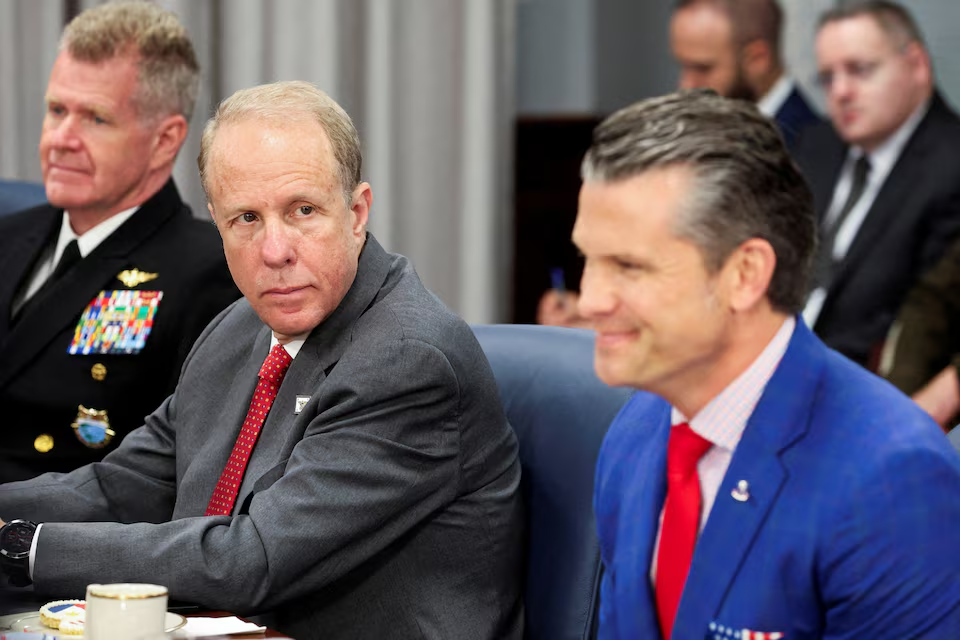
WASHINGTON — The White House has reportedly been examining potential candidates who could succeed Deputy Secretary of Defense Steve Feinberg, according to people familiar with the discussions. The development comes as the Pentagon experiences a series of senior-level departures and growing pressure over military weapons supplies.
Sources familiar with the matter said the administration’s review began months ago and included discussions with senior members of the U.S. Senate. Those conversations were reportedly aimed at determining whether possible nominees would have sufficient support to pass the confirmation process.
However, no final decision has been made to remove Feinberg, and officials have rejected reports that a formal replacement process is currently underway.
White House Denies Plans to Remove Feinberg
The White House pushed back strongly against reports that Feinberg could soon leave his position.
White House spokeswoman Anna Kelly said the anonymous sources cited in the report were not reliable and emphasized that President Donald Trump continues to value the work being carried out by Defense Secretary Pete Hegseth, Deputy Secretary Feinberg and the wider Defense Department.
The Pentagon also denied that a replacement process was underway.
Hegseth separately expressed support for Feinberg, saying that the deputy defense secretary remains in his position and is expected to continue working with the administration.
Pentagon Faces Growing Leadership Turnover
The possible review involving Feinberg comes at a time when the Pentagon has experienced several notable changes among its senior leadership.
Army Secretary Dan Driscoll recently left his position after reportedly experiencing tensions with Hegseth. The Navy secretary and other senior Army officials have also departed in recent months.
If Feinberg were eventually replaced, his departure would represent another major change at the top of the Defense Department.
The continuing turnover has attracted attention because Hegseth has been attempting to implement significant changes within the Pentagon while the United States faces major military and strategic challenges.
Weapons Production Becomes a Major Concern
One of Feinberg’s key responsibilities has been strengthening the American defense-industrial base and increasing the production of military equipment and ammunition.
However, defense analysts have warned that expanding production capacity has proven difficult. Manufacturing constraints, funding delays and the lengthy process involved in increasing weapons production have created obstacles.
Congressional funding has also been an important factor. Although the administration has placed significant emphasis on rebuilding weapons inventories, some defense industry officials have argued that the pace of congressional appropriations has made the process more difficult.
Hegseth has defended Feinberg’s performance and said he has worked extensively to strengthen the country’s defense manufacturing capabilities.
Pressure Over U.S. Weapons Stockpiles
The issue has become particularly important amid the prolonged conflict involving the United States and Iran.
Reports have indicated that the U.S. military has used substantial quantities of certain long-range precision weapons and air-defense interceptors. Concerns about declining inventories have reportedly generated discussion among members of Congress and military officials.
President Trump has dismissed claims that the United States is facing critical ammunition shortages, maintaining that the country possesses a larger weapons inventory than any other nation.
Reports that Hegseth privately blamed Feinberg for declining stockpiles were rejected by the White House and Pentagon officials.
Pentagon spokesman Sean Parnell said Hegseth did not hold Feinberg responsible for the country’s ammunition position.
Feinberg’s Push to Transform Pentagon Spending
Since joining the Trump administration, Feinberg has pursued a different approach to defense spending and military-industrial policy.
He has promoted greater direct investment by the Pentagon in private companies and supported financial programs intended to provide additional assistance to defense contractors.
His efforts have included work through Pentagon offices focused on strategic investment and economic defense.
In an August memorandum directed at defense companies, Feinberg reportedly urged contractors to increase production speed while providing greater transparency regarding costs and pricing.
The initiative reflects the administration’s broader effort to expand America’s defense manufacturing capabilities.
Congressional Scrutiny Over Cerberus Ties
Feinberg has also faced questions from lawmakers regarding his previous association with private equity firm Cerberus Capital Management, which he co-founded.
Senator Elizabeth Warren has raised concerns about potential conflicts of interest involving Cerberus and Pentagon spending, including initiatives connected with the administration’s missile-defense plans.
Pentagon officials have rejected the allegations of a conflict.
According to Pentagon spokesman Sean Parnell, Feinberg has completely separated himself financially from Cerberus and has recused himself from matters involving the company.
Cerberus did not provide a response to requests for comment.
What Happens Next?
For now, there is no confirmed indication that Steve Feinberg will leave his position.
The reported White House review suggests, however, that the administration may be evaluating its options as it deals with significant challenges involving Pentagon leadership, military spending and weapons production.
Whether Feinberg remains in office or a successor is eventually selected could become an important indicator of the Trump administration’s future direction for the Defense Department.
Bottom Line: The White House has reportedly considered possible candidates to replace Steve Feinberg, but officials currently deny that a decision has been made to remove him. The situation comes amid broader Pentagon leadership turnover and continuing debate over U.S. weapons stockpiles and defense production.